
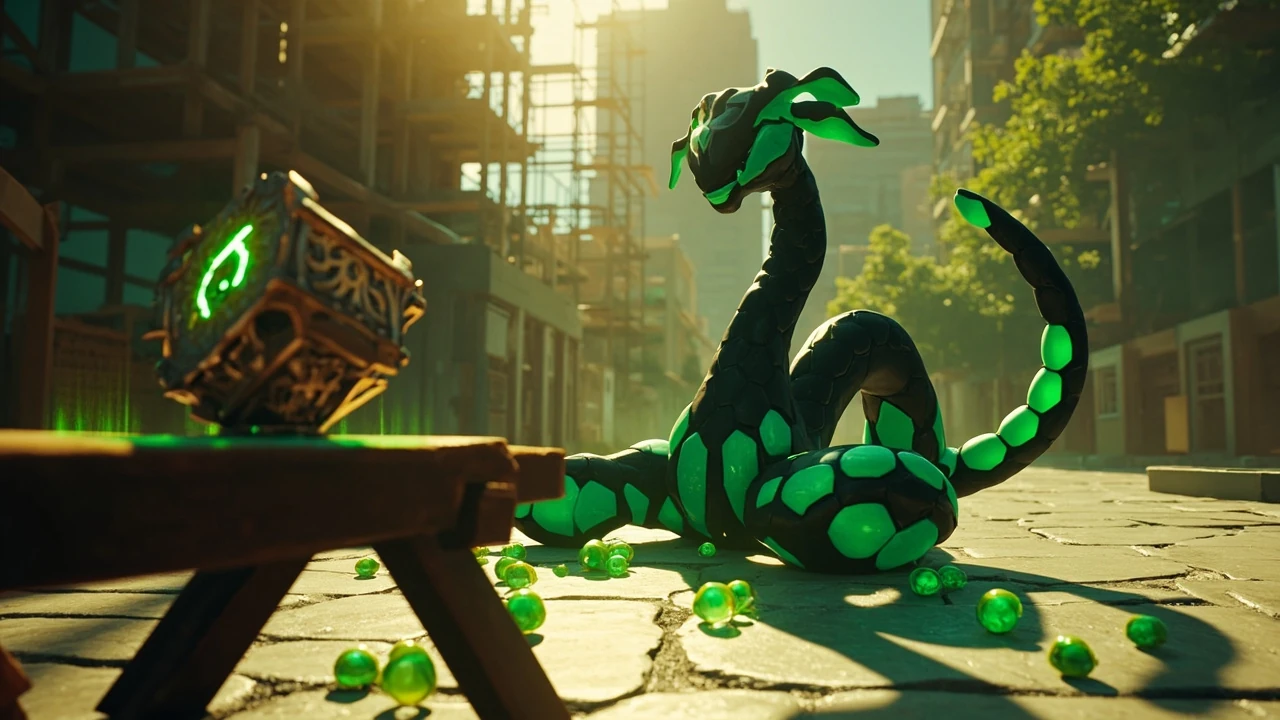
How to get Zygarde in Pokémon Legends Z-A
Zygarde is one of the most unusual creatures in the Kalos Pokédex, and Pokémon Legends Z-A treats it differently from standard encounters. Instead of finding it on a route or inside a glowing patch of tall grass, players collect the small life forms Zygarde is made of, then combine those pieces into the form the story requires. The mechanic is closer to a side quest than to a single battle, which is why many trainers reach the post-game unsure of how much progress they still need. This guide walks through the exact sequence the game uses, the prerequisite flags that unlock each stage, and the steps that determine whether Zygarde appears in its 50% Forme or its Complete Forme.
The instructions below assume a single-player run on the latest patch of Pokémon Legends Z-A for Nintendo Switch, with the main story already finished. Online trading and event timing are not used, so the methods here work without a second console, a friend, or a specific real-world date. Where a step depends on a story beat, that beat is named so a player who has stepped away from the save file can confirm whether they are ready to begin.
Because Zygarde is built from smaller pieces, the practical question is rarely “where do I catch it” and more often “what do I still need to collect, and in what order.” The sections below answer that question by first covering the prerequisites, then the collection loop, and finally the assembly and post-game quests that complete the Pokédex entry.
What Zygarde is in the Kalos ecosystem
Zygarde is the Order Pokémon, introduced in Generation VI as part of the original Kalos trilogy. The lore describes it as a creature that watches the ecosystem from below the surface, made up of many individual cells and a smaller number of cores. When the local balance of life is disturbed, those pieces assemble into a form suited to the threat. In gameplay terms, that design translates into three playable shapes and a collection system that mirrors the biological idea.
The three Formes behave like three different Pokémon. The 50% Forme, called Zygarde, is the dog-like shape with a green-and-black body and a trailing tail. The 10% Forme, Zygarde 10% Forme, is the small two-legged creature with a wedge-shaped head. The Complete Forme, Zygarde Complete Forme, is a larger multi-tailed entity with greater power. The stat balance and move pool of each Forme differ enough that the order in which a player builds them changes the early battles they can take.
For the purposes of this guide, the practical takeaway is simple: Zygarde cannot be encountered directly on a route. The cells, cores, and assembly steps replace the wild battle that a player would normally use to add a legendary to their team. Understanding that structure up front is what makes the rest of the collection process predictable.
Prerequisites before you start collecting
Before the Zygarde sequence becomes available, three flags in the save file must be set. Each flag is reached at a specific point in the main story, and none of them are optional. Skipping ahead with a guide or returning to an earlier save will not unlock the Zygarde content.
- Complete the main story of Pokémon Legends Z-A. The final mission, which concludes the Lumiose City arc, must be cleared. This is the gate that opens the post-game map state and the associated quest log entries.
- Reach the post-game Pokédex evaluation milestone. After the credits roll, the player receives a Pokédex update that records additional research tasks. The Zygarde quest becomes visible only after this update is registered at a PC in a Pokémon Center.
- Receive the Zygarde Cube from an in-game character. Once the previous two flags are set, a short scene triggers in Lumiose City that adds the Zygarde Cube to the player’s key items. Without this item, the cells cannot be stored or processed.
Players who have already finished the main story but have not seen the Cube scene should check the quest log under the Research Tasks tab. If the entry is not present, the most common cause is that the post-game Pokédex update has not been opened. Speaking to the researcher behind the front counter of any Pokémon Center and selecting “View Research Tasks” will usually trigger the scene on the spot.
Understanding cells and cores
Zygarde is built from two types of component. Cells are the most common and are responsible for the body’s basic functions. Cores are rarer and act as the organizing centers. The Cube stores both, and the player converts them into usable Formes through a dedicated menu option.
| Component | Visual | Rarity | Main role |
|---|---|---|---|
| Zygarde Cell | Small green hexagonal fragment | Common | Builds the body of any Forme and is required for the 50% Forme base |
| Zygarde Core | Red-and-black pod with a green eye | Rare | Acts as the assembly center; the Complete Forme needs several cores in addition to cells |
The numeric thresholds matter because the game hides them in the quest text. A typical run uses around one hundred cells to assemble the 50% Forme and a smaller additional number, plus several cores, to build the Complete Forme. The exact counts can shift with patches, so the Cube menu is the source of truth at any given moment. The values shown in the table below are the minimums the original release shipped with; treat the Cube as authoritative if the numbers move.
| Forme | Cells required | Cores required | Notes |
|---|---|---|---|
| Zygarde 10% Forme | 10 | 0 | Unlocked first; useful as a lightweight addition to a balanced team |
| Zygarde (50% Forme) | 50 | 1 | The base Zygarde shape used in most of the in-game references |
| Zygarde Complete Forme | 100 | 5 | Built last; reserved for the post-game research tasks and certain rematch battles |
The counts above are useful as a planning baseline, not as a guarantee. What is guaranteed is that the Cube shows a live progress bar for each Forme, so the player can always see how many components are still missing before assembly. This feedback loop is what keeps the collection from feeling like guesswork.
Where to find Zygarde cells
Cells are scattered across the Lumiose City map, including the districts that are unlocked after the main story. Each cell has a fixed spawn location, which removes the randomness that governs regular encounters. The cells can be collected in any order, and the game does not require a specific path through the city.
Most cells appear in the following categories of location, and a quick sweep of each category usually yields several pieces at a time.
- Rooftops of tall buildings. Cells frequently sit on the edges of accessible roofs, including the structures near Prism Tower and the buildings that line the central plaza. The player can reach most of them by climbing external staircases or using the new traversal moves unlocked in the late game.
- Parks and green spaces. Belle Fontaine Park and the smaller greenways that connect the districts hide cells along the trimmed hedges and beside benches. The cells are easier to spot in the early morning or late evening when the lighting casts long shadows.
- Side alleys and backstreets. Several cells are tucked into narrow service alleys behind restaurants and shops. The alleys are not marked on the main map, so the player may need to walk the perimeter of each district to find them.
- Wild Zone borders. Where the urban area meets the rougher terrain of the Wild Zones, cells can be found at the transition points. These are useful to collect after a Wild Zone run, since the player is already in the area.
Because cells respawn on a fixed timer, the player can plan collection in short loops. A complete sweep of one district, then a trip to a Pokémon Center to rest, then a second sweep of the same district, usually gathers more cells than a single long walk. This is the simplest way to keep momentum without grinding.
Where to find Zygarde cores
Cores are rarer than cells and are tied more tightly to story progression. A core does not appear on the map until the player has met a specific condition, and each new core usually corresponds to a milestone in the post-game research tasks. Trying to find a core before its milestone triggers will lead the player to a location that has nothing to collect.
Once the milestone is set, the core appears in one of a small number of fixed locations, and the player is pointed in the right direction by a quest marker on the map. Common examples of milestone conditions include:
- Defeating a specific post-game trainer at a marked rooftop battle ring.
- Completing a research task that involves photographing a particular species in a particular district.
- Restoring a power supply in a side area that is unlocked by the post-game story.
The exact wording of each milestone can shift with patches, so the quest log entry is the authoritative source. When a core is available, the player will see a red marker on the map, and the Cube will show a notification that a new core has registered.
Step-by-step: assembling Zygarde 50% Forme
Once enough cells and at least one core have been collected, the 50% Forme can be assembled through the Cube. The process is menu-driven and does not require a battle. The steps below describe a clean assembly that uses the default thresholds from the original release.
- Open the main menu and select the Zygarde Cube from the key items list.
- Choose “View collected cells and cores” to confirm the current counts. The progress bars for each Forme update as items are added.
- If the 50% Forme threshold is met, the “Assemble 50% Forme” option becomes available. Select it.
- Confirm the assembly in the dialog that follows. The Cube consumes the required cells and core, and the 50% Forme is added to the player’s party storage as a single level-appropriate entry.
- Save the game. Assembly is not undone by a soft reset, but a save point makes the rest of the post-game easier to plan.
If the option is greyed out, the most common cause is that the player has the correct number of cells but is missing a core. Cores cannot be substituted by additional cells, and the Cube will not warn the player which requirement is short. The progress bars on the same screen make the missing component obvious, so a quick visual check is enough to confirm what to find next.
Step-by-step: building Zygarde Complete Forme
The Complete Forme is the most expensive assembly and is intended to come after the 10% and 50% Formes have already been built. The Cube will only enable the option once both earlier Formes are in the Pokédex, even if the raw cell and core counts are technically satisfied. This is a deliberate design choice to make sure the player has the context for what the Complete Forme represents.
- Make sure the 10% Forme and 50% Forme have been assembled and are present in the Pokédex.
- Continue collecting cells until the Cube’s Complete Forme bar reads at the maximum value. The bar fills only with cells collected after the earlier Formes were built, so a player who assembled the 50% Forme too quickly will need to keep collecting.
- Complete the post-game research tasks that release additional cores. The fifth core in particular is tied to a specific battle, so the quest log should be checked between attempts.
- Return to the Cube and select “Assemble Complete Forme.” Confirm the dialog and save immediately.
Zygarde first appeared in Pokémon X and Y as part of the Generation VI trio, alongside Xerneas and Yveltal. The original design used a small number of in-game events to distribute the cells and cores, and the Complete Forme was rare enough that many players saw it only in marketing material. Pokémon Legends Z-A consolidates that system into a single in-game quest, which is the most player-friendly version of the mechanic to date. The collection design is consistent with the broader design philosophy of the Pokémon Legends subseries, which treats legendaries as a research activity rather than a single capture moment. That approach is one of the reasons the Zygarde sequence reads as a quest rather than a chance encounter.
Because the Complete Forme changes the player’s approach to several post-game battles, a brief evaluation of its role is worth doing before the assembly dialog is confirmed. The next section covers how the three Formes fit into a typical team, so the player can decide whether to assemble Complete first or wait until the rest of the team is settled.
How each Forme fits into a team
Zygarde’s three Formes do not have the same role in battle. Choosing which one to keep on the active team is a separate decision from choosing which one to assemble first, and the answer depends on the rest of the player’s roster. The summary below maps the typical team role to each Forme based on the stats the game uses by default.
| Forme | Stat focus | Best team role | Strong matchups |
|---|---|---|---|
| 10% Forme | Speed, moderate offense | Lead or pivot | Frail sweepers, screens users |
| 50% Forme | Balanced offense and defense | Mid-game anchor | Special walls, mixed attackers |
| Complete Forme | High offense and bulk | Late-game closer | Tank-heavy lines, weather setters |
The Complete Forme is a closer, not a starter, because its stat profile rewards a player who already controls the field. A typical first attempt at the post-game story battles works better with the 50% Forme, while the Complete Forme is most useful in the hardest rematch content. Players who prefer a faster playstyle can keep the 10% Forme in the lead slot and rotate to the 50% Forme when the opponent’s defenses stabilize.
Recommended move coverage and held item
Zygarde’s learnset is largely type-locked to Dragon and Ground, so coverage is more important than raw move count. The base moves cover most situations, but two or three support moves turn Zygarde from a strong addition into a team anchor. The plan below works for any Forme, with minor adjustments for the role each one plays.
- Dragon-type STAB. Outrage or Dragon Pulse, depending on whether the player prefers raw power or accuracy. Outrage locks the user into a turn, so a Choice Scarf build needs a switch plan.
- Ground-type STAB. Thousand Arrows is the most consistent move because it ignores evasion boosts and the airborne immunity of certain opposing types. Earthquakes remains a strong alternative for general use.
- Support slot. Coil boosts Attack and Defense in one turn, which compounds well with the 50% and Complete Formes. Substitute protects against status and gives the player a free turn to scout.
- Coverage. Extreme Speed lets Zygarde pick off weakened opponents that would otherwise outspeed it. This is particularly useful in the 10% Forme, where raw speed is already a strength.
The held item is a separate choice. A Choice Band suits the Complete Forme’s raw power, a Choice Scarf suits the 10% Forme’s speed, and a Leftovers or Assault Vest fits the 50% Forme’s balanced profile. The Cube does not change the held item, so the player can experiment without spending additional resources.
Troubleshooting common Zygarde issues
Even with the right thresholds, a few predictable problems stop players from finishing the sequence. The list below covers the issues that show up most often in community reports and support threads.
- Cells are not appearing at a known location. Cells respawn on a fixed timer and the player may be visiting the location during the cooldown. A visit to a Pokémon Center, a save and reload, or a short in-game rest usually resets the spawn.
- The Cube option is greyed out. The most common reason is a missing core, followed by a missing core plus the need to assemble an earlier Forme first. The Cube screen displays the exact missing item, so a quick check resolves the question.
- The quest marker for a core is not visible. The marker only appears after the corresponding research task is complete. Skipping ahead to the location is not productive, since the core is gated by the task and not by the location.
- Zygarde is level-locked after assembly. Each Forme assembles at a fixed level range. If the assembled Zygarde is lower level than expected, the most common cause is that the player assembled it before the corresponding post-game milestone, which can lower the level ceiling. Reassembling after the milestone is the standard fix.
None of these issues are permanent, and the deterministic nature of the collection system means the same fix works every time. The single most common cause of stalled progress is attempting to build a higher Forme before the earlier one is in the Pokédex, and the Cube’s progress bar is designed to make that mistake easy to spot.
How long the collection takes
Time spent on Zygarde varies with how thoroughly the player has already explored Lumiose City. A player who has been thorough during the main story may already have many cells, because the cells are present in the world from the first moment the post-game unlocks. A player who skipped exploration can expect a longer run.
For planning, the following ranges cover a typical single-player run with a single character. They are estimates, not guarantees, and they assume no trading, no use of outside tools, and no farming exploit.
- 10% Forme: Around fifteen to thirty minutes of focused collection, mostly from nearby parks and rooftops.
- 50% Forme: Around one to two hours of collection, distributed across the main districts and the Wild Zone borders.
- Complete Forme: Around two to four additional hours, depending on how many cores the player has unlocked and how quickly the milestone research tasks clear.
The pacing of the post-game research tasks matters more than raw cell count for the Complete Forme. A player who clears the research tasks in a steady order will reach the final core faster than a player who tries to brute-force the collection loop.
Post-game research tasks to prioritize
Not every research task is directly tied to Zygarde, but several are, and clearing them in the right order avoids dead ends. The list below is a sensible priority order for a player whose only goal is to finish the Zygarde sequence efficiently.
- Register the post-game Pokédex update at a Pokémon Center. This is the global unlock for the Zygarde content.
- Complete the rooftop trainer research tasks, since they release the first two cores and offer solid early experience for the rest of the team.
- Clear the district photography tasks, which release additional cores and add Pokédex entries that are useful elsewhere in the post-game.
- Finish the power restoration task, which is the milestone that releases the fifth core needed for the Complete Forme.
- Begin a final sweep of the city for any remaining cells before assembling the Complete Forme.
This order is not the only valid one, but it minimizes backtracking. Each task leaves the player in a part of the city that contains cells, so the collection loop can run between research tasks without wasted travel.
What changes if the game is patched
Live patches can change the cell thresholds, the locations of cores, and the order of the research tasks. The Cube’s progress bar is updated to match the current build, so the bar is always the right reference, but a guide that quotes a specific cell count can become outdated. The general structure of the sequence, however, is more stable: main story, post-game update, Cube, cells, cores, Formes, post-game research tasks, Complete Forme. That sequence is what this guide documents, and the structure is the part that does not change between patches.
Players who are returning to a save file from an earlier build should check the version number on the title screen before quoting any specific number from a guide. A mismatched version can explain why the Cube shows a different progress than the guide expects.
How Zygarde compares to other Kalos legendaries
The other major legendary in the Kalos generation, Xerneas or Yveltal depending on the version, is a single encounter in a fixed location, and the encounter itself is the reward. Zygarde is the opposite: the encounter is replaced by a multi-stage collection, and the reward is the act of assembly. The two designs are complementary, and most players will pursue both during the same post-game run.
For a team that already has the version legendary, the typical slot for Zygarde is in the supporting cast rather than the headline. The 50% Forme is the most common choice because it covers several team roles at once, while the Complete Forme is reserved for the hardest post-game battles. A player who is short on time can stop after the 50% Forme without leaving a major gap in the roster.
Common mistakes to avoid
Most Zygarde collection problems come from the same handful of missteps. The list below summarizes the issues that the game does not warn about explicitly, and avoiding them is often faster than recovering from them.
- Assembling the Complete Forme before the 50% Forme is in the Pokédex. The Cube will block the option, but a player who has read a guide and is in a hurry may try to push past the limit by collecting extra cells first. The extra cells do not unlock the assembly until the earlier Forme is built.
- Confusing cells and cores in the inventory. The Cube’s progress bar treats them separately, and the icons are similar. A useful habit is to check the bar at the same time as the inventory, so the two numbers stay in sync.
- Ignoring the quest log between research tasks. The post-game research tasks unlock cores, and a skipped task means a missing core. A quick check of the quest log between district sweeps keeps the milestone order visible.
- Building Zygarde before the rest of the team is ready. The 50% and Complete Formes are most useful once the player has a stable team around them. Building them too early can leave the player without a flexible roster for the post-game story.
Brief history of Zygarde in the franchise
Putting it all together
The Zygarde sequence in Pokémon Legends Z-A rewards players who plan a route through the post-game research tasks rather than those who try to collect every cell in a single pass. The mechanical loop is simple: clear the main story, register the post-game update, receive the Cube, gather cells, unlock cores through research tasks, assemble the Formes in order, and finish the post-game research tasks that complete the Pokédex entry. Each step builds on the one before it, and the Cube’s progress bar makes the next step obvious.
For most players, the practical answer to how to get Zygarde in Pokémon Legends Z-A is to budget a few post-game sessions for the collection loop rather than treating it as a single quest. The 50% Forme is the most useful single milestone, and the Complete Forme is the natural follow-up for players who want a closer for the hardest rematch content. The cells, cores, and assembly thresholds are stable enough that the process does not require a guide on repeat runs, which is the strongest sign that the system is well designed.
Next steps after Zygarde
Once the Pokédex entry is complete, the next decision is whether to focus on the post-game story content or the competitive battle modes. Zygarde has a useful role in both. In the post-game story content, the Complete Forme is a strong closer for the rematch battles, while the 50% Forme is a reliable mid-game anchor. In the competitive battle modes, the role depends on the ruleset, and the 10% Forme is often the most flexible pick because of its speed.
Players who are curious about how the other legendaries in the Kalos generation fit into the same loop can compare the Zygarde sequence with the version legendary sequence. The two sequences are independent, and a player can pursue both in parallel. The Zygarde sequence is the longer of the two, so most players finish the version legendary first and use the leftover time for the Zygarde assembly.
Frequently asked questions
Do I need to finish the main story before I can get Zygarde?
Yes. The Zygarde sequence is gated by the end of the main story, the post-game Pokédex update, and the receipt of the Zygarde Cube. None of these are optional, and the Cube is not in the player’s inventory before all three flags are set. Players who have finished the main story should open the research tasks at a Pokémon Center to trigger the Cube scene.
Can I get Zygarde without the post-game story?
No. The Zygarde sequence is a post-game activity. The cells, cores, and Cube are not available during the main story, and the research tasks that release additional cores are also post-game content. Skipping the main story is not a shortcut, because the content is gated, not just discouraged.
How many cells do I need for the 50% Forme?
On the original release, the 50% Forme needs fifty cells and one core. The exact count can change with patches, and the Cube’s progress bar is the source of truth at any given moment. The numbers in this guide are planning baselines, not guarantees.
How many cores do I need for the Complete Forme?
On the original release, the Complete Forme needs five cores in addition to the full cell count. The cores are released by post-game research tasks, and the fifth core is tied to the power restoration task. The Cube’s progress bar makes the missing cores visible, so a quick check resolves any uncertainty.
Can I trade Zygarde forms with another player?
The game supports online trading, and Zygarde Forms can be traded once assembled. Trading is not required to obtain the original set of Formes, and this guide covers the single-player route. Players who prefer to trade for a Complete Forme should still build the 50% Forme first, because the trade requires the Pokédex entry to be present on the receiving save file.
Do Zygarde’s stats change between Formes?
Yes. The 10% Forme is fast with moderate offenses, the 50% Forme is balanced, and the Complete Forme has the highest offense and bulk. The differences are large enough that the choice of Forme changes the role the Pokémon plays in a team, and the choice should be made after the rest of the team is settled.
What level is assembled Zygarde?
Each Forme assembles within a fixed level range that matches the post-game milestone that unlocks the assembly. The exact level can shift with patches, but the assembled Zygarde is always at a level that is ready for the post-game story content. A Zygarde assembled before the corresponding milestone may be at a lower level, and reassembly is the standard fix.
Can I rebuild a Zygarde Forme after assembly?
Yes. The Cube can disassemble an existing Forme and return the cells and cores, and the process is reversible. This is useful for players who want to change the held item, the move set, or the team role without restarting the collection loop. The disassemble option is on the same screen as the assembly option.
Is Zygarde useful in competitive play?
Yes, but the role depends on the ruleset. The 10% Forme is most useful in formats that reward speed, the 50% Forme is a balanced choice for general play, and the Complete Forme is reserved for rulesets that allow its full stat profile. The decision should be made after the player has settled on a team, because Zygarde’s role is easier to define in the context of a finished roster.
What should I do if the Cube is missing from my key items?
The Cube is awarded by an in-game scene after the post-game Pokédex update is registered. Players who do not see the scene should check the quest log under the research tasks tab, and then visit a Pokémon Center to confirm the update is registered. If the scene still does not trigger, a save and reload is the next step, followed by a check for the latest patch on the title screen.
Leave a Reply