
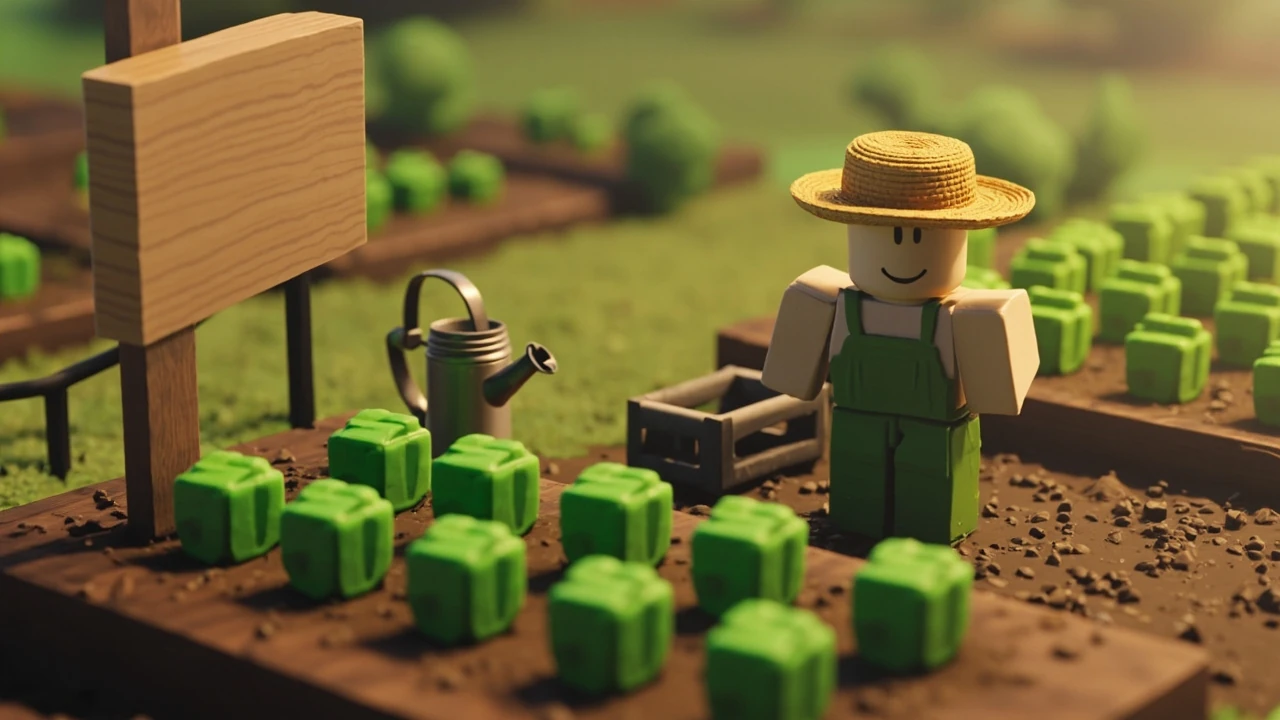
Garden Horizons Roblox codes: how to redeem, what to expect, and where to look
Codes in Roblox experiences usually follow the same rhythm: a developer publishes a short text string, players type it into an in-game field, and the server trades the input for a reward. Garden Horizons Roblox codes sit inside that rhythm, and most of the friction players run into comes from a few predictable places: not knowing where the redemption field lives, trying a code after it has already expired, copying a string from a secondary source that quietly dropped a space or a capital letter, or pasting the same code twice on the same account. This page walks through the redemption flow as it currently exists in the build, the kinds of rewards Roblox farming and tycoon experiences typically hand out, and the editor-side checks that keep a code list useful between updates. The goal is practical: a reader who finishes the page should be able to find, redeem, and verify a code without guessing at any of those steps.
Garden Horizons is one of several garden- and farming-themed experiences on the platform, sitting in the same broad category as titles that reward consistent logins, slow resource loops, and cosmetic layering on a small plot of land. The genre rewards consistent logins, so even small claims, a free pot, a starter seed pack, or a short currency boost, can change how a session feels. That is why a code that looks trivial can be worth redeeming on the same day it is published, and why a list that is even a week old is often a list of expired strings. The sections below cover what to look for, what to ignore, and how to handle the cases where a code refuses to work. There is also a short section on mid-week patches, since the developer ships updates on a faster cadence than the social channel, and that timing matters when a previously working string suddenly stops redeeming.
What Garden Horizons Roblox codes are and how they usually work
Codes in experiences like Garden Horizons are short redeemable strings that the developer distributes through official channels. The format is almost always a single word, a short phrase, or an alphanumeric token, and the redemption path is almost always a text field inside a dedicated menu. The reward side varies, but it almost always fits the experience’s core loop: currency, seeds, tools, cosmetic items, or a small time-saver that smooths the early game. A typical code might grant a small handful of premium currency, a single rare seed, or a hat that does not change gameplay but is nice to wear while tending the plot.
Two structural points matter before anything else. First, redemption is a server-side action, which means the client has to be online and the experience has to be reachable when the player submits the code. A code that works in a Discord screenshot will not work in a private test server or in an offline cached copy of the client. Second, codes are bound to a specific experience ID. A string published for another garden or farming game will not redeem in Garden Horizons, even if the two games share assets, themes, or developers. Treating the experience as the unit of truth is the single biggest reason code lists stay accurate, and it is also the reason aggregator pages that group several Roblox games under one heading are usually the first place a bad string ends up.
There is also a small but real lifecycle behind each string. The developer decides when to publish it, when to disable it, and whether to reuse it for a later event. Most codes are single-use per account rather than global one-shot, so two players on the same server can both redeem the same string without one stealing the reward from the other. Knowing that helps explain why a code that a friend swore worked last week can still be valid for a new player today, and why a list that has not been updated in a month is rarely worth trusting.
Where to find active Garden Horizons Roblox codes
Reliable sources share a small number of traits: they are official, they are recent, and they are willing to mark a string as expired rather than letting it sit on the page. The list below is ordered by the trustworthiness of the channel, not by convenience, and the order matters because the top of the list is where the developer speaks directly.
- The developer’s official Roblox experience page, including the description and any pinned announcements on the game’s community space.
- The developer’s verified social channels, such as a Discord server with a dedicated codes channel, an X or Twitter account, or a YouTube community tab.
- The Roblox platform itself, where some experiences surface a codes entry in the in-game menu or in a small modal that pops up after a patch.
- Established Roblox aggregator sites that maintain revision history, timestamp their updates, and remove expired entries rather than appending “expired” to the same line.
- Video walkthroughs from creators who confirm each string in the same recording, since the recording acts as a timestamped receipt.
Casual screenshots, reposts on short-form video platforms, and auto-generated blogs that recycle the same five codes for months are the most common sources of stale strings. A code list that does not change between updates is a stronger signal of staleness than it is of stability, because gardening experiences tend to publish new codes around events, milestones, and seasonal updates. The most useful single habit is to compare two sources: if a string appears on an aggregator but not on the developer’s social channel within 24 hours, it is probably either fake or borrowed from a different experience.
It also helps to be specific about the search. Queries that include the developer’s handle, the experience ID, or a recent patch name tend to surface the official post first, while broad queries like “free Roblox codes” return the recycling blogs described above. Search operators such as quoted strings can narrow the field further, especially when a code is an unusual word and would otherwise be drowned out by unrelated results.
How to redeem Garden Horizons Roblox codes in-game
The exact menu path depends on the build the developer ships, but the redemption flow follows a familiar pattern across farming and tycoon experiences. The steps below describe the most common layout; if the experience has been updated, the developer will usually leave a sign, an NPC, or a button that points toward the same destination, and a restart of the client resolves most visual mismatches.
- Launch Garden Horizons from the Roblox client and finish the loading screen so the world is fully streamed in.
- Locate the codes entry point. In most builds this is a button on the main HUD, a sign near the spawn area, or an NPC named after codes, rewards, or social media links.
- Open the redemption window. A single-line text field with a confirm or redeem button is the standard layout.
- Type the code exactly as published. Treat the string as case-sensitive, and avoid leading or trailing spaces, since copy-paste from a chat client can attach hidden whitespace.
- Confirm the entry. A successful redemption produces a small on-screen confirmation, usually a pop-up listing the reward and the quantity.
- Check the relevant inventory or mailbox tab if the reward does not appear in the active hand. Some experiences route cosmetic rewards through a mailbox or claim queue rather than the inventory screen.
- Close the redemption window cleanly rather than forcing the client to terminate, because some builds only persist the reward on a graceful exit from the menu.
For readers who want a more detailed view of how Roblox experiences handle in-game economy and reward distribution, the Horizon High School article on English Wikipedia gives background on a similarly named educational institution in Winter Garden, Florida, while the National Center for Education Statistics record for Horizon High School provides the public-school dataset entry that confirms the institution’s identifier and location. These two external sources are included as named reference points rather than as recommendations, since neither is a code source; they simply show how names overlap across the web and why a careful search helps avoid mistaking one entity for another, especially when a player is trying to track down a code dropped during a school-themed event.
If the redemption window closes or the game is restarted before confirmation, the input is treated as cancelled. If the server is busy, the redemption may take a few seconds to register. Neither outcome means the code itself is broken; both are normal responses to a busy client or a queued server action. The same is true when the client briefly displays a generic error before resolving; in practice, the safest move is to wait for the confirmation pop-up rather than re-submitting the string in rapid succession, which can sometimes lead to a duplicate-reward flag on older builds.
Typical rewards and how to use them efficiently
Reward design in garden experiences tends to cluster around a handful of mechanics. Knowing the cluster makes it easier to plan what to spend first when a new code drops, and it also helps with the long-running question of whether to claim a cosmetic now or save the inventory slot for an upgrade later.
| Reward type | What it usually does | Where it tends to land | How to use it efficiently |
|---|---|---|---|
| Currency | Adds a small amount of in-game cash or premium currency | Wallet or balance tab | Save it for an upgrade you can not yet afford; avoid spending it on a cosmetic that does not change progression |
| Seeds or saplings | Provides starter or rare plant items | Inventory or seed bag | Plant the highest-tier seed first so the growth timer runs while you are online |
| Tools or equipment | Grants a better watering can, hoe, or harvester | Equipment slot | Equip immediately and replace the older tool rather than leaving the new one in storage |
| Cosmetics | Adds a hat, trail, or plot decoration | Avatar or plot customization | Apply through the cosmetic menu, since these items usually do not affect gameplay |
| Boosts or timers | Provides a short growth or yield boost | Active effects panel | Activate right before a long play session so the timer does not expire while you are offline |
| Mailbox drops | Routes a reward through a claim queue | Mailbox or claim tab | Open the mailbox before the server’s daily reset, since queued items can expire at the rollover |
The order of priority depends on the player’s progression stage. Newer players usually benefit more from seeds and tools, since these directly raise the yield per harvest and shorten the early-game grind. Players further along the progression curve often value cosmetics and short boosts more, because their infrastructure already handles yield and the boost just compresses a long wait. A simple rule of thumb: if the reward shortens a timer the player is already waiting on, use it during the next play session; if it is purely cosmetic, hold it until the next event so the look matches the moment.
Common reasons a Garden Horizons Roblox code does not work
Most redemption failures are not bugs; they are mismatches between what the player typed and what the server expects. The checks below are ordered from the most common cause to the least common, and the order is worth respecting, because the first three items on the list explain the vast majority of failed redemptions in this genre.
- The code has already expired. Expiration windows vary, and some strings are tied to a specific event that the developer does not extend.
- Whitespace was captured. A space at the start or end of a pasted string is the single most frequent reason a “valid” code fails.
- Capitalization was changed. Most Roblox codes are case-sensitive, so a lowercased copy of a mixed-case string will not redeem.
- The code is for a different experience. A string published for another garden or farming game, even one with a similar name, will not redeem here.
- The build is out of date. If the client has not loaded the latest version, the redemption service can refuse new codes until the patch is applied.
- The server is in maintenance. Some developers disable redemption during scheduled maintenance to avoid granting duplicate rewards.
- The same account has already redeemed the string. Some codes are one-shot per account, even when the source list does not say so.
- The player’s region is restricted. A small number of codes are region-locked, especially when they are tied to a partnered creator or a regional event.
When none of these explanations fit, the most useful next step is to check the developer’s most recent post. If the string is on the official list, the issue is almost always on the client side; if it is not on the list, the string was probably never valid for this experience, and continuing to retry it is wasted effort. A useful diagnostic in this case is to open a second Roblox tab, load a different experience, and try the same string there; if it also fails, the string is dead on the developer’s side rather than the player’s side.
How to keep a Garden Horizons code list accurate between updates
Code lists decay quickly, and the most common reason is that a page keeps adding new strings without removing expired ones. A short editor routine keeps a list useful without demanding constant attention, and it works just as well for a single contributor as for a small team.
- Check the developer’s official channel on the same day a new code is reported, and add the string only after it appears in a primary source.
- Mark each entry with the date it was confirmed, not the date it was first seen on a secondary source.
- Remove, rather than relabel, any string that the developer flags as expired in a later post.
- Keep the list short. A small, dated list is more reliable than a long, undated one.
- Re-check the entire list after each major patch or seasonal event, since expiration windows often shift around updates.
- Cross-reference at least one secondary source per string during the first 24 hours, then drop the cross-reference once the developer confirms the code in a pinned post.
- Keep a short note on the build version on which each string was last verified, so a future patch that breaks redemption can be traced back to a specific client release.
This is the same routine used by long-running Roblox guide sites, and it scales surprisingly well. The hard part is not the routine itself; it is resisting the temptation to keep a string on a page once it has expired, because the search cost of pruning is paid immediately while the benefit shows up weeks later. A page that is honest about what is no longer working tends to attract more returning readers than a page that quietly keeps a long list of dead strings, since the first kind of page is the one players bookmark.
How Garden Horizons compares with similar Roblox farming experiences
Roblox has several garden, farm, and tycoon experiences that use a code system, and the differences between them are usually small but worth knowing. The table below compares a few common patterns rather than specific reward values, since reward values change with each update and quoting them would date the page within a week.
| Experience pattern | Typical code channel | Typical reward mix | Expiration behavior |
|---|---|---|---|
| Garden Horizons | Social posts, in-game announcements | Seeds, currency, small boosts | Tied to events or patches; rarely re-used |
| Pet simulator pattern | Dev Twitter, Discord milestones | Currency, pet eggs, hatch boosts | Often expires with the next major update |
| Tycoon pattern | Group walls, in-game NPCs | Cash drops, drop-rate boosts, cosmetics | Frequently time-limited, sometimes one-shot per player |
| Driving and racing pattern | Dev social, livestream drops | Vehicle skins, currency, wheels | Tied to season or championship window |
| Restaurant and cooking pattern | Patch notes, Discord pins | Ingredient packs, decor, station unlocks | Often re-issued with a small suffix change for returning events |
For readers who want to compare similar Roblox games more broadly, the Pet Simulator 99 codes guide covers a related pet-focused experience, and the Aurora codes guide covers an early-game progression loop that shares a similar reward cadence. Both links live on the same site and use the same redemption logic, which is why they are useful as a reference when a code refuses to work. The practical lesson from the comparison is that the redemption flow is largely the same across these experiences, so a player who learns the flow once can apply it to almost any garden, farm, or tycoon title on the platform without relearning the menu path each time.
Safety and account-side considerations when redeeming codes
Codes are a low-risk feature, but they interact with the same client that the player logs into every day. A few baseline habits keep redemption safe regardless of the experience, and they also help when a code looks too generous to be real, which is usually the moment a scam is hiding in the offer.
- Type codes through the in-game field, not through a third-party site that asks for the player’s password or session token. No legitimate code system needs login credentials.
- Avoid “code generators” that promise free rewards in exchange for an account name. These are scams; the reward is not real and the account risk is.
- Do not paste a code into a public chat, since some developers treat public pastes as consumed and may disable the string for the rest of the player base.
- If a code is part of a limited event, redeem it during the same session, because expiration windows are sometimes shorter than the developer’s posts suggest.
- Enable two-step verification on the Roblox account before redeeming large event codes, since the account is the only thing the codes are tied to.
- Sign out of any third-party Roblox helper that the player no longer uses, because older helpers sometimes still hold an active session token.
The underlying principle is simple: legitimate codes move through the developer’s own channels and never require anything beyond the string itself. Anything that asks for more than the string is a signal to step back, and the safest response is to find the same string on a primary channel and redeem it through the in-game field directly.
What to do when the experience is updated mid-week
Roblox experiences ship updates on a cadence that is often faster than the developer’s social channels. When Garden Horizons is updated mid-week, the redemption flow can change in two ways: the location of the codes button may move, and previously valid codes may stop working. The right response is the same regardless of which change happened: restart the client, confirm the build version, and check the developer’s most recent post before treating any code as broken. A quick scan of the patch notes is usually enough to confirm whether the codes system itself was touched, since developers tend to call out economy changes in the first paragraph.
Players who maintain their own lists often keep two columns per entry: a “confirmed working” date and a “last checked” date. The first column is updated only when the developer publishes a new string; the second is updated every time the player tries the code. Over a few weeks, the second column exposes expiration patterns that the developer never announces directly, and it makes it easier to predict when a string is about to expire. A second useful habit is to log which build the code was tested on, because some breaks are tied to specific client versions and recover once the player updates.
For larger patches, it is also worth waiting 24 hours before publishing a verdict. Early post-patch redemptions sometimes fail because the redemption service has not fully rolled out, not because the string is bad. A short grace period protects the list from false negatives and avoids the embarrassment of marking a valid code as expired on the same day a patch ships.
Editorial checklist for any future Garden Horizons code post
The checklist below is the minimum that should be in place before a code list goes live. It is short on purpose, because long checklists are rarely followed and short ones are easier to audit. Each line maps to a failure mode the page has already seen, which is why the wording leans concrete rather than abstract.
- At least one primary-source confirmation per code, dated.
- A clear expiration policy on the page, so readers know when to expect removal.
- A short troubleshooting block, because redemption errors are the most common reason readers contact the editor.
- No fabricated strings. If a primary source has not confirmed a code, it does not belong on the page.
- A note about case sensitivity and whitespace, since these two details cause the majority of failed redemptions.
- A visible “last updated” line at the top of the page, since readers use it to decide whether the list is still worth trusting.
- A short statement on how the page handles region-locked or one-shot codes, because the answer is rarely obvious from the string alone.
Following the checklist does not make a page perfect, but it does remove the issues that drive readers away within the first few seconds of landing. A page that is honest about its limits is also easier to update, because the next editor inherits a clear baseline rather than a vague one.
Frequently asked questions
How often are new Garden Horizons Roblox codes released?
There is no fixed schedule. New codes tend to appear around major patches, seasonal events, and milestone announcements, so a reader who checks the developer’s official channel once a week is unlikely to miss a string. A daily check is useful only during a known event window, and even then it tends to be the same two or three channels that pick up the new string first.
Where is the codes button inside Garden Horizons?
Most builds place the codes entry near the spawn area, either as a button on the HUD or as a sign or NPC close to the starting plot. If the button is not visible, the in-game settings menu or the social tab usually contains a link to the same window. After a mid-week patch the button can move briefly, so a restart of the client is the first thing to try before assuming the field is gone.
Are Garden Horizons Roblox codes case-sensitive?
Yes, the redemption server treats the string as case-sensitive in nearly every Roblox experience, including garden and farming titles. A mixed-case string typed in all lowercase will not redeem, even if every other character is correct. The same rule applies to digits: a zero and a capital “O” are easy to confuse in some fonts, and the server does not treat them as interchangeable.
What should I do if a code says “invalid” or “already redeemed”?
Invalid usually means the string is wrong, expired, or for a different experience. Already redeemed means the same account has used it before. In both cases, the right next step is to check the developer’s most recent post and to confirm there is no leading or trailing space in the input. If the error persists on a string the developer just published, a quick client restart and a re-check of the build version is the next move.
Can I redeem Garden Horizons codes on a private server?
Some experiences allow redemption on private servers, others restrict it to public ones. The reliable test is to try the redemption in a public server first; if the string works there but not on the private server, the developer has restricted the feature and there is no client-side fix. A few titles toggle this setting per code, so a working string in public does not always mean it will work in private.
Do expired codes ever come back?
Occasionally, but it is rare. Developers sometimes reissue a code for a returning event, more often with a slightly different string so the new code is distinguishable from the old one. Treating expired codes as permanently gone is safer than hoping a developer will reuse the same token, and it is the assumption most long-running code lists on the platform operate under.
Can I share a code with friends?
Yes, and most developers expect codes to be shared. The one habit to avoid is pasting the code into a public in-game chat, because some redemption systems treat public pastes as consumed for that session. Sharing through a private message or a closed group chat is fine, and is in fact how the codes usually spread in the first place.
What is the fastest way to know a code has expired?
Watch the developer’s social channel for a follow-up post that removes the string, and check whether the in-game redemption field now reports the code as expired. If the field still accepts the code, the developer has not yet disabled it, even if a third-party list has marked it as expired. In that situation the in-game behavior is the more reliable signal, because the list may simply be out of date.
Are there risks to typing codes into the in-game field?
No. The redemption field is a normal client input that only sends the typed string to the developer’s server. It does not collect account credentials, and it does not change any account setting beyond the reward it grants. As long as the field is reached through the official experience menu, the interaction is as safe as any other in-game text input.
Where else can I find Roblox codes for similar games?
For adjacent experiences, the Pet Simulator 99 codes page and the Aurora codes page on the same site follow the same redemption logic and reward structure, which makes them a useful reference when a code in any of these experiences refuses to work. The genre conventions are similar enough that a fix that works on one page usually points to the right diagnostic on the others.
Leave a Reply