
Field Depot in ARC Raiders: what it is and how to use it
The field depot is a long-term storage option in ARC Raiders, the cooperative extraction shooter developed by Embark Studios and published by Embark. It sits between two other resource layers that new players tend to confuse: the active backpack that goes into every raid, and the local stash that you reach through a central hub. Because the field depot keeps its contents across deaths and across matches, it changes the way you plan a run, especially when a session goes badly and you want a fallback that does not vanish with one bad encounter. Understanding what the field depot actually holds, how it differs from a quick stash, and which items are worth parking there is the difference between treating it as a junk drawer and using it as the backbone of a loadout.
ARC Raiders is a third-person shooter built around risk and reward. Players drop into hostile surface zones, scavenge for parts, weapons, and crafting materials, then call for extraction before hostile machines or rival Raiders cut the run short. Everything you carry into a raid can be lost if you die before reaching the extraction point. The field depot is the answer the game gives you to that core tension: a place to bank progress so that a single failed run does not reset hours of effort.
How the field depot differs from your backpack and stash
Before you decide what to put in the field depot, it helps to understand the three resource layers ARC Raiders uses during a session. They look similar at a glance, but each has a different purpose, and the field depot is the one designed to survive a wipe.
| Storage layer | Where you access it | Persists through death | Capacity | Intended use |
|---|---|---|---|---|
| Backpack | Equipped on your Raider at the start of every match | No, items drop where you die and can be looted | Limited by backpack tier; increases with upgrades | Carries the tools, ammo, and resources you plan to use in the current run |
| Local stash | Storage benches inside each surface map | No, contents are lost at the end of the match | Shared with other players who interact with the same bench | Temporary handoff to teammates, quick swaps, and short-term parking during a single match |
| Field depot | Central hub area between matches | Yes, persists across deaths, sessions, and wipes of a single run | Larger than a backpack, smaller than a warehouse; grows with progression | Long-term storage for spare weapons, crafting materials, and valuables you want to protect |
The clearest way to think about the three layers is by the time horizon. Your backpack is the next thirty minutes. The local stash is the next few minutes. The field depot is everything after that. When you stand at the storage bench in the hub before queuing for a match, the locker interface is what the game calls your field depot, and that is the layer this article focuses on.
One practical consequence of that design is that you cannot pull a weapon out of the field depot mid-raid. Once you leave the hub, your only sources of additional gear are drops from defeated ARC machines, loot from caches, the local stash bench, and airdrops. Treat the field depot as a planning step, not a safety net you can reach in the middle of a firefight.
What the field depot is designed to hold
The field depot accepts most non-consumable items and a wide range of crafting materials, but it is not an unlimited warehouse. You will eventually fill it, and deciding what to keep, what to sell, and what to recycle is a recurring chore. The categories below describe the kinds of items that most often earn space in a long-term depot.
- Spare weapons and weapon parts: a backup rifle, a silenced sidearm, or a melee tool you have modded to a state you trust
- Crafting materials: metal scraps, polymers, electronics, and the rarer components needed for higher-tier recipes
- Ammo and consumables: a buffer of standard rounds, medical packs, and grenades reserved for difficult nights
- Tokens and currencies: any in-match currency that can be used outside of a run, including faction tokens if you have them
- Mods and attachments: scopes, grips, and stabilizers that you can move between weapons when you return to the hub
- Quest items: any objective item required for a long-running contract that you do not want to carry into a risky run
A useful rule of thumb is to ask whether losing the item in a failed raid would set you back more than a single play session. If the answer is yes, it belongs in the field depot. If losing it would only cost you the time to re-craft, it can stay in the backpack or get sold.
Where the field depot lives in the hub
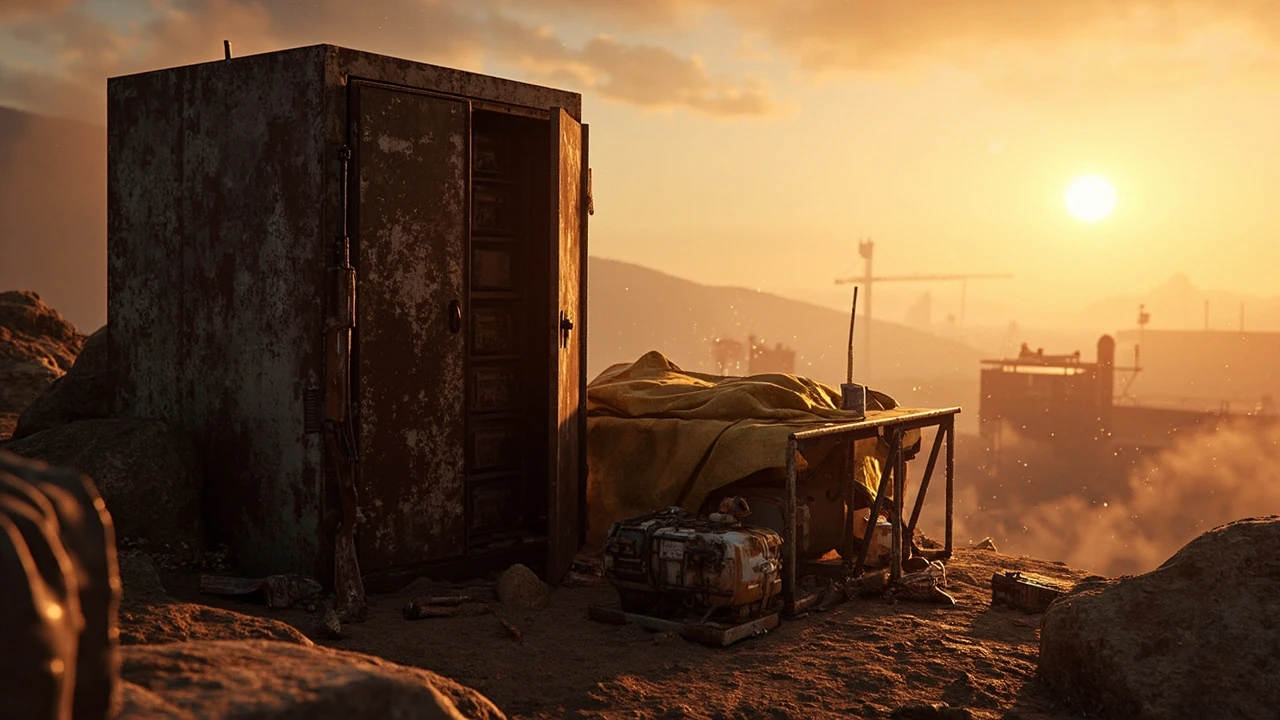
The field depot is the storage area attached to the central hub, the same location where you queue for a match, accept contracts, and interact with vendors. The exact layout can shift as Embark iterates on the build, but the role of the depot stays the same. Look for a heavy metal locker or a set of industrial shelving in the safe area near the launch pad. Some players miss it on their first visit because it is framed as scenery rather than a primary menu.
When you interact with the depot, you get a grid-based interface that is closer to a survival crafting game than a typical shooter loadout screen. You can drag items between the depot and your backpack, sort by category, and quick-deposit everything you want to leave behind. Vendors in the same hub accept items you do not want to store, so a clean way to play is to deposit first, sell second, and only then queue for the next run.
If you cannot find the depot, the simplest trick is to look for the crafting benches and walk away from them. The depot is almost always placed in a way that creates a triangle between vendors, crafting stations, and the launch pad, so you should pass it on a normal loop through the hub.
Why the field depot matters for extraction runs
Extraction shooters punish greed. Every item you carry is a small gamble against the next ARC patrol, the next rival squad, and your own timing on the extraction timer. The field depot reduces the size of that gamble by giving you a place to put the things you cannot afford to lose. That single change reshapes how players approach the rest of the game.
Once you trust the field depot, three behavioral shifts tend to follow. First, you start carrying less into a raid, because you know the truly valuable items are safe. Second, you are more willing to take risks on a hot drop, because a failed push only costs the items in your backpack, not the items in long-term storage. Third, you spend more time planning loadouts around the depot’s contents, swapping in specialized tools for specific contracts rather than clutching a single general-purpose kit for every run.
How to set up a field depot that actually helps you
An empty depot is not the same as a useful depot. A few habits will keep the storage layer working for you instead of becoming a junk pile you have to clean every other session.
- Reserve a row for spare weapons: keep one weapon per role so you always have a backup for short, mid, and long range
- Maintain a minimum buffer of crafting materials: pick a floor, such as twenty units of common materials, and restock whenever you fall below it
- Park quest items in their own section: this prevents you from accidentally selling or scrapping something a contract still needs
- Store one full medical kit and one stack of grenades: these are the items you most often wish you had during a run gone wrong
- Keep one modded weapon and one unmodded weapon: the unmodded version is cheap to lose on a scouting raid
- Move sellables out regularly: do a quick pass after each session and convert low-value loot into currency
The exact numbers will change with patches, but the structure is what matters. A depot organized by role, by material tier, and by quest status is far easier to use under time pressure than a single undifferentiated grid of icons.
Field depot strategy by playstyle
Different players lean on the field depot in different ways. The right approach depends on how aggressive you tend to play, how often you play in a squad, and how much crafting you do between raids.
| Playstyle | What to prioritize in the depot | What to leave in the backpack | Common mistake to avoid |
|---|---|---|---|
| Solo scavenger | Self-revive kit, spare sidearm, repair materials | Single primary weapon, light ammo, one healing consumable | Hoarding rare items you will not use this week |
| Squad looter | Extra ammo types for teammates, shared healing, one heavy weapon | Role-specific kit, such as a sniper rifle or a close-range SMG | Carrying everyone’s spare ammo instead of letting the depot do it |
| Large material buffer, rare components, mod inventory | One mid-tier weapon and a toolkit | Selling crafting materials to fund short-term purchases | |
| Quest runner | Quest items, faction tokens, scanner consumables | Light combat kit focused on speed | Forgetting that quest items also live in the depot, not just the contract screen |
For solo players the depot doubles as insurance. You will not always have a teammate to revive you, so the field depot is where you keep the self-revive and the backup sidearm that lets you finish a run on your own. Squad players can spread loadouts more thinly, but the depot still matters as shared storage that the team treats as a common pool. Crafters should think of the depot as a workshop shelf: everything you need to refit a weapon between runs should already be there, so you do not lose a session to material farming.
Common mistakes players make with the field depot
Most of the friction with the field depot is not about the system itself. It comes from treating it like the wrong kind of storage. The mistakes below show up often enough that it is worth naming them directly.
- Treating the depot as a trash can: anything you cannot fit in the backpack ends up in storage, which clutters it with low-value items
- Selling from the depot without checking: vendors see the depot’s contents as a source, so a careless click can offload a quest item
- Forgetting that the depot does not refill your backpack: you still need to equip items from the depot before queuing for a match
- Ignoring capacity: when the depot fills, new high-value items will not deposit and you may lose them to a death in the field
- Mixing modded and unmodded weapons without labels: it is easy to grab the wrong loadout when the depot is full of similar rifles
Most of these problems are solved by spending five minutes at the end of a session doing a clean pass: deposit, sell, repair, queue. The players who skip that step end up with a depot that is technically full of stuff but functionally empty of useful options.
How the field depot interacts with crafting and vendors
The For additional context, hub in ARC Raiders ties the field depot to a small economy. Crafting benches draw directly from the depot’s materials, vendors buy items out of the depot, and repair stations will pull weapons from the depot to fix them. The result is that the depot is not a separate silo. It is the source the rest of the hub pulls from.
A useful workflow is to treat the depot as a queue. Anything you deposit becomes available for crafting, selling, and repairing in the order you place it. If you always put materials in a specific slot and sellable items in another, you can speed up the end-of-session loop considerably. If you mix everything together, you will spend more time sorting than playing.
Repair is the easiest interaction to overlook. Damaged weapons can be pulled from the depot to a repair bench, fixed, and returned. That means you can keep a damaged favorite in storage, repair it on a slow night, and bring it back into rotation the next day. The same is true of armor, tools, and most gear that degrades during a raid.
Field depot in co-op: sharing and etiquette
When you play in a pre-made squad, the field depot is a personal space, but it is not the only storage layer the squad shares. The local stash inside a map is shared, and squadmates can also hand items over during a raid. That division lets the depot stay personal while still allowing the team to coordinate resources.
A small set of habits will keep co-op runs smooth without requiring a long conversation every match. Decide in advance which squadmate is the designated carrier for heavy items. Park quest-critical objects in the depot of the player who most needs them. Keep a small buffer of healing items in the depot of the player who tends to be the team’s medic. None of this is enforced by the game, but it removes most of the friction that causes loot arguments mid-raid.
If you play with random squads, the same etiquette still applies, but you cannot enforce it. The safer default is to assume other players will not return items, and to keep the depot stocked with personal backups rather than squad-shared resources.
How progression changes how you use the field depot
The field depot grows in capacity as you progress, which is one reason early-game players often feel cramped while later players complain less. In the first few hours, you are likely to fill the depot with common materials and low-tier weapons because you do not yet know which items are worth saving. By the time you reach mid-progression, you have a clearer sense of the recipes you actually use and the weapons you trust, so the depot can be reorganized around that smaller core.
Late progression tends to bring a new problem: the depot stays full of legacy items that you no longer need but that feel wasteful to scrap. The honest answer is that scrapping is part of the loop. A clean depot with the right items is more useful than a full depot that contains a museum of every weapon you ever used. Most players will benefit from a periodic purge where they sell or recycle anything they have not touched in two or three real-time weeks.
Seasonal updates and patches can also shift the value of stored items. When a weapon is buffed, it can move from junk to keep. When a recipe is changed, the materials behind it can change role. The depot is a snapshot of your current priorities, and it is worth revisiting those priorities when the patch notes drop.
Field depot in the wider ARC Raiders economy
ARC Raiders is part of a recent wave of extraction shooters that includes Escape from Tarkov, Hunt: Showdown, and the long lineage of similar designs. The field depot in ARC Raiders plays a similar role to secure containers and stash boxes in those games, but with a few differences worth noting for players who have spent time in adjacent titles.
ARC Raiders leans toward accessibility. The field depot is generous, the storage interface is forgiving, and the cost of losing a run is lower than in some of its harder peers. That does not make the game easy. It means the field depot is a tool that rewards planning rather than a punishment for new players. If you are coming from a stricter extraction shooter, the adjustment is to treat the depot as a convenience layer and not a hard save: it protects you from bad luck, but it does not replace good decisions during a raid.
For players new to the genre, the field depot is a gentler on-ramp. You do not need to learn the entire economy on day one. You can deposit what feels valuable, sell what feels cheap, and refine the system as you go. The game does not punish that early indecision harshly, which is part of why ARC Raiders has drawn attention as a more welcoming entry point. Coverage from outlets such as Game Informer’s ARC Raiders preview has highlighted the same balance, calling out the way the game reduces the harshness of traditional extraction loops while keeping the tension intact.
Pre-raid checklist that uses the field depot
Most failed runs can be traced to a gap in preparation. The field depot is the easiest place to fix that, because the right setup is the same every session. A short pre-raid checklist, run from the depot, will keep you out of the most common trouble.
- Open the depot and confirm the weapon you plan to use is repaired and modded
- Verify your healing and grenade buffer, and restock from the depot if needed
- Check that quest items for the current contract are in the depot, not in the backpack
- Confirm a small reserve of crafting materials is parked for emergency repairs
- Sell or recycle any low-value items added during the last run before queuing again
- Mark the current loadout in the depot so you can return to it after a death
The list is short on purpose. The field depot works best when the pre-raid routine is also short. The longer the checklist, the more likely you will skip a step, and the more likely you will end up in a raid with a half-loaded backpack and no plan for extraction.
How the field depot changes end-of-session decisions
Most extraction games end a session in one of two moods: you survived and extracted, or you died and lost your kit. ARC Raiders offers a third, gentler ending: a quiet moment in the hub, organizing the field depot, deciding what to keep and what to recycle. That moment is more important than it looks, because it sets up the next session.
Players who treat the field depot as part of the gameplay loop, rather than a chore, tend to progress faster and enjoy the game more. The reason is simple. Each session is a small cycle of risk, extraction, and reorganization. The field depot is the bridge between cycles, and a well-managed bridge makes the cycles feel smooth. A neglected bridge makes every session start with a scramble.
Field depot terminology you may see in patch notes
Patch notes for extraction games love their own jargon, and ARC Raiders is no different. The phrases below show up often enough to be worth a short glossary, especially for players who read patch notes but do not always parse the storage language.
- Field depot: the long-term storage layer in the central hub, persistent across matches
- Local stash: in-match storage that resets at the end of a raid, used for quick handoffs
- Backpack: the active inventory carried into a match, lost on death
- Material buffer: a deliberately maintained minimum stock of crafting materials in the depot
- Loadout slot: a saved configuration of weapons and gear that can be pulled from the depot in one step
- Vendor sell-down: the practice of converting low-value depot contents into currency between runs
When patch notes mention storage changes, the field depot is almost always the layer being adjusted, because that is the layer that survives a death. If a note talks about a change to the stash, it usually means the in-match layer, not the long-term one. Keeping those straight avoids the surprise of depositing what you thought was safe and finding out it was only stored for the rest of the run.
How the field depot compares with similar systems in other games
Players who have spent time in other extraction shooters often ask how the field depot stacks up. The honest answer is that it depends on what you compare it to. In games with very strict economies, a small secure container is the only thing you can rely on. In ARC Raiders, the field depot is closer to a full stash with persistence, which is more forgiving.
| System | Persistence | Capacity feel | Best for |
|---|---|---|---|
| ARC Raiders field depot | Survives deaths and matches | Generous, grows with progression | Players who want a forgiving storage layer with room to plan |
| Secure container, Escape from Tarkov | Survives raids | Very small, fixed slots | Players who want every slot to matter and can manage a tight inventory |
| Stash, Hunt: Showdown | Survives matches | Medium, shared across hunters | Players who treat storage as a meta-game between runs |
| Player inventory, light extraction games | Often lost on death | Small, single-layer | Players who prefer short sessions and minimal inventory management |
That comparison is not a ranking. Each design suits a different tolerance for inventory management. ARC Raiders sits closer to the Hunt: Showdown end, with a storage layer that can hold a real loadout, but the comparison is also useful for setting expectations. If you are coming from a stricter game, the field depot will feel roomy. If you are coming from a lighter game, it will feel like a second job. Neither feeling is wrong, and the system rewards players who meet it where it is.
Field depot in the context of ARC Raiders’ overall design
The broader design of ARC Raiders, which the ARC Raiders Wikipedia entry describes as a cooperative third-person extraction shooter set in a post-collapse future, is built around a loop of risk, extraction, and gradual progression. The field depot is the connective tissue in that loop. It is the reason a failed run feels like a setback rather than a reset, and it is the reason a successful run feels like progress rather than a temporary windfall.
For new players, the field depot is also the place where the game reveals what kind of systems game it is. The presence of a deep, persistent storage layer tells you, before you ever fire a shot, that ARC Raiders expects you to play across many sessions, that your choices between runs matter, and that the economy is a real layer of the experience rather than decoration. The depot is, in that sense, a small contract between the game and the player about how time will be respected.
When to ignore the field depot
It is worth saying the obvious, because new players often overcorrect. The field depot is a tool, and like any tool, it is possible to overuse it. There are moments when the right move is to ignore it entirely.
If you are still in the first few sessions of the game, focus on learning the maps, the ARC machines, and the extraction timers. Do not worry about depot optimization. Just deposit what feels valuable and move on. The fine-grained sorting can come later. If you are in a long squad run with friends and the mood is right to keep going, do not stop the session to do a depot pass. The depot will be there after the run. The window for fun with a full squad will not.
The other case where the depot can be ignored is when you are about to start a major patch cycle. If a big update is hours away, there is little reason to spend a session reorganizing storage that the patch may change. Wait for the notes, then plan the new depot around the new system.
Putting it all together: a one-page field depot plan
If you have read this far and want a simple, repeatable plan to start using the field depot well, the steps below are enough. They are intentionally generic so they survive patches.
- Treat the field depot as your long-term storage and your backpack as your raid storage
- Reserve space for spare weapons, materials, healing, and quest items in fixed rows
- Keep a minimum buffer of common materials and restock when you fall below it
- Do a quick deposit-sell-repair loop at the end of every session
- Match your depot contents to your playstyle, not to a generic template
- Reorganize the depot after each major patch or progression milestone
That plan will not make every run successful, and it is not meant to. Extraction shooters remain hard, and the field depot is one tool among many. What it does, when used well, is remove a layer of avoidable frustration so the runs that go wrong cost you less, and the runs that go right feel earned. That, more than any single weapon or recipe, is the real value of the field depot in ARC Raiders.
Frequently asked questions
What is the field depot in ARC Raiders?
The field depot is the long-term storage layer in ARC Raiders, located in the central hub between matches. It holds weapons, crafting materials, consumables, mods, and quest items, and its contents persist across deaths, matches, and full sessions. It is separate from the backpack you carry into a raid and the local stash benches inside each map.
Is the field depot shared with other players?
No. The field depot is a personal storage layer tied to your account. The local stash inside a map is shared with other players in the same match, but the field depot in the hub is yours alone. Squad play is coordinated through the local stash, contracts, and direct item handoffs during a raid.
What should I store in the field depot first?
Start with a backup weapon, a self-revive or healing item, a small stack of ammo, and a buffer of common crafting materials. Those four categories cover most of the situations where the depot actually saves a run. You can expand the depot’s role once those basics are stable.
Can I access the field depot during a raid?
No. The field depot is only reachable in the hub before and after a match. During a raid, your active inventory is limited to your backpack, the local stash benches inside the map, and whatever you can scavenge from the world and from defeated enemies.
Does the field depot reset between seasons or wipes?
ARC Raiders has not announced a global wipe of long-term storage the way some extraction shooters do, and the field depot is designed to persist across sessions. Seasonal changes can affect specific items, recipes, and vendors, so it is worth checking the patch notes when a new season begins, but the depot itself is intended as a stable layer across a season.
How do I increase my field depot capacity?
Capacity grows as you progress through the game, primarily through crafting bench upgrades, reputation gains, and milestones tied to vendors in the hub. There is no single fast unlock, and the exact list of upgrades can change with patches, so check the current hub interface for the active upgrade paths.
Can I lose items that are in the field depot?
Items inside the field depot are not lost on death in a raid. They can, however, be sold or scrapped by accident if you use the vendor or recycling interface without checking the source. Treat any sell or recycle action as a confirmation step, and you will not lose items you intended to keep.
How is the field depot different from a stash in other extraction shooters?
It plays a similar role to long-term storage in games like Hunt: Showdown or Escape from Tarkov, but it is more generous and more forgiving. The ARC Raiders field depot is built to be a planning layer, not a punishment for new players, which is part of the game’s broader effort to be a more accessible entry into the extraction genre.
What is the best way to organize the field depot?
Group items by role rather than by acquisition order. Keep weapons in one section, materials in another, healing in a third, and quest items in a fourth. Within each section, sort by tier so the most valuable items are easiest to find. The goal is to be able to rebuild a loadout in under a minute.
Does the field depot help with quests and contracts?
Yes. Quest items can be stored in the depot so they are not at risk during a run, and the materials needed for many contracts are easier to manage when they are already parked in long-term storage. Keeping quest items separate from regular loot is one of the easiest ways to avoid losing progress on a contract by accident.
Leave a Reply